


I Built a Track Car So You Don’t Have To: Modifications to Get You On Track
- Anthony Morrison

- Apr 24, 2024
- 5 min read

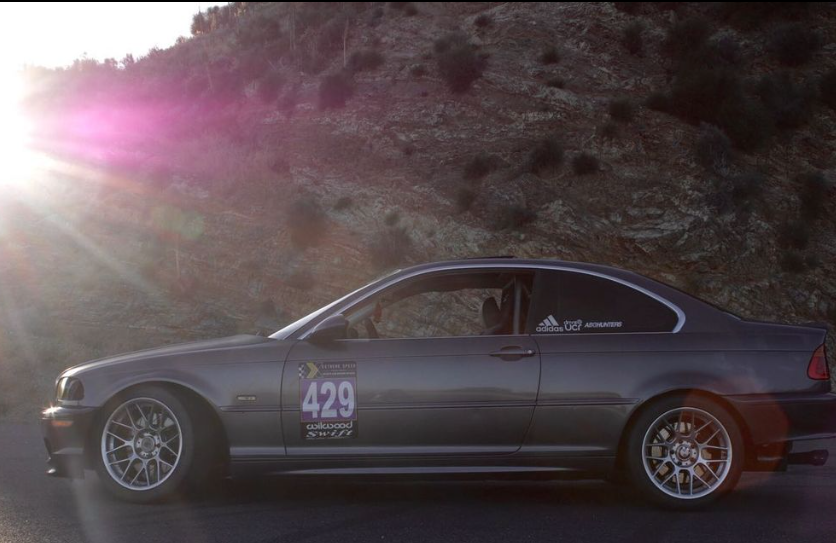
I’ve owned my BMW E46 for 8 years and since day one I purchased the chassis with an intention of making it a track car. Over the years the car has seen many iterations, all with the focus of shaving seconds and even tenths off lap times. Through the years I've learned that building a car is about journey but without a roadmap can be tedious, repetitive, and very costly.
I decided to make a list of modifications that are necessary for anyone trying to build a track car. I've spent many a night in the garage, on the road, and at the track all in the search of the perfect lap. Through trial and lots and lots of error I now know what works and what doesn't. I highly recommend you take a peep at this list of your considering building a track car.
The following is a list of modifications for those looking to build a track car. All of these are things I would change in the pursuit of speed.
These aren’t ranked in any particular order but I will mention here and now that maintenance is the most important modification that you can do. If you’re going to push a car to the limit, it is important to remove any doubts or worries about a neglected maintenance item that could cause catastrophic failure. Trust me, the best days at the track are ones where you and your car make it home in one piece.
Wheels and Tires
You can't go anywhere with a good set of track rubber! A set of wide wheels and tires is a necessity for speed. Not only do wheels add style but they can also function as a the biggest performance gainers by removing rotational mass. With additional wheel width you can fit a larger set of tires for more grip. Grip is always good but there is such a thing as too much.
Always look into the treadwear rating of a tire before you purchase them. If you daily your car but it sees occasion track use, using a tire with a higher treadwear rating might be the move for you. If your car never sees the street and is only on the quest for low lap times, find the lowest treadwear possible and don't forget to warm them up on a few outlaps.
You may need to modify your vehicle before fitting a set of wheels and tires. If this doesn't sound like something you're up for, it may pay to do some research before your purchase.
I highly recommend that you go to your local track or read on the forums and see what other people are running.
Tire Recommendations
Nankang Ar1
Bridgestgone RE71 (have yet to drive the RS but am very excited)
Falken Azenis RT660

Brakes
On the racetrack the most time is made in the braking zones. It sounds counter intuitive but a drivers braking technique is one of the keys to setting fast lap times. It took me a while to understand this but it turns out that the later that you can brake the more time you can save.
There's a lot of ways you can go about brake upgrades. A big brake kit is a great way to ensure that brakes never fade and can stand up to the abuse of constant braking on track. This is a great route but big brake kits are very expensive for very little gain in my personal opinion. I will always recommend a set of aggressive track pads and upgraded brake fluid before dropping the big bucks on a BBK.
Easier to install and more cost effective I've found that a set of track pads to be one of the best track modifications. It will take some getting used to but once you get consistent with your braking technique you'll be shaving seconds in no time.

Suspension
Suspension is a very broad list of componentry that varies based on every chassis. A lot goes into making suspension work so I'll try to make this as simple as possible. Every car has moment center (or roll center). These moment centers location determines vehicle dynamics or how a car interacts with the four tires on the ground.
Aftermarket suspension components allows you to dial in and control roll center location which effects vehicle dynamics.
If what you just read sounds like a new language that's fine. I'll give you the short answer and tell you the best suspension modification for any vehicle is sway bars or anti-roll bars.
At the track, during high g turns, the car starts to roll over onto its tires. This is no good because you want the tire to use its entire contact patch through the corner for maximum grip. Factory sway bars allow excessive roll, in some cases shifting the weight balance to far over the front axle and over loading the tire.
Aftermarket sway bars reduce this roll and keep the car flatter through the corner for more stability and control. The best part is upgraded sway bars can even be used on street cars that are driven spirited without huge compromise because they don't make much noise when installed properly.
I always recommend sway bars to anyone because its one of those ones that makes the biggest difference on the street or the track with little to no compromises.
Alignment

After you've dialed in your suspension its time to make the most out of it with a performance alignment. An alignment determines how the tire interacts with the ground beneath them which is why alignments are one of the most crucial tools for any track car. A quality alignment can provide better steering wheel feedback and increase the grip of a car by manipulating a few key tire angles.
The three main alignment measurements are:
Camber
Caster
Toe
There's a whole science in just alignments themselves so I'll the key words here and take a deep dive in another article. Just make sure that if you're going to head to the track you get a performance alignment.
Limited Slip Differential
If you find yourself building a track car, a limited slip differential is a must. The reason being is your factory open differential unit that only spins one wheel in the corners. This is no good because power is only being sent to one spinning wheel which prevents the car from rotating. This results in excessive understeer and a loss of time.
What a limited slip differential does is allow power to be sent to both the wheels. The wheel with the most grip is allowed more power than the wheel with the least traction. The wheel with the least traction has its wheel speed limited. This mean increased grip and rotation throughout the corner allowing for higher corner exit speeds.
If I could do it all over again I would start with these five modifications and recommend them to anyone interested in building a track car. Safety being the number one mod, everything else listed here is a close second. If you want to go faster you can go wrong with anything listed here.
There you have it! The Wannabe guide to building a track car. If theres a component you have more questions about, send us a message via Instagram or an email via the contact us link!


Comments